
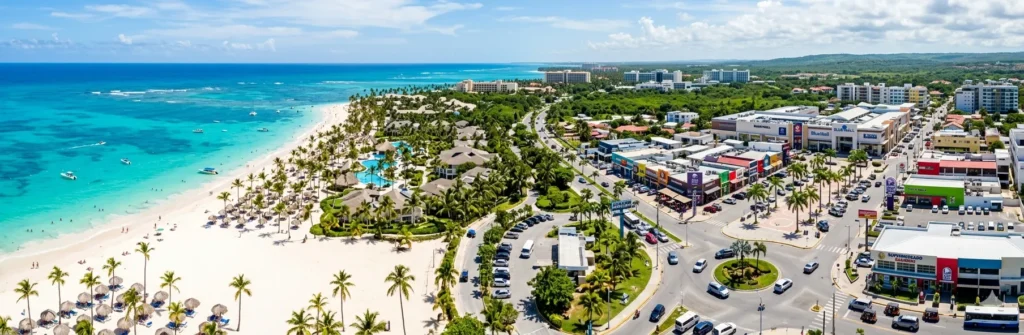
Market Report: Real Estate Investment in Punta Cana
While the previous fiscal year was marked globally by the total recovery of tourist flows post-disruption, 2026 is defined strictly as the “Year of Asset Maturity.” For the sophisticated international investor, understanding this definitive paradigm shift outlined in our current Punta Cana Real Estate Market Report is the core difference between simply acquiring a standard vacation property and consolidating a high-yield international wealth portfolio.
To fully comprehend the current macroeconomic trend, we must evaluate both international indicators and localized structural shifts. While in 2025 the Dominican Republic market was actively absorbing mass-scale residential projects, in 2026 the focus has decisively shifted toward ultra-exclusivity, premium branding, and long-term operational sustainability. This fundamental evolution forms the backbone of any comprehensive Punta Cana Real Estate Market Report compiled for modern capital deployment.
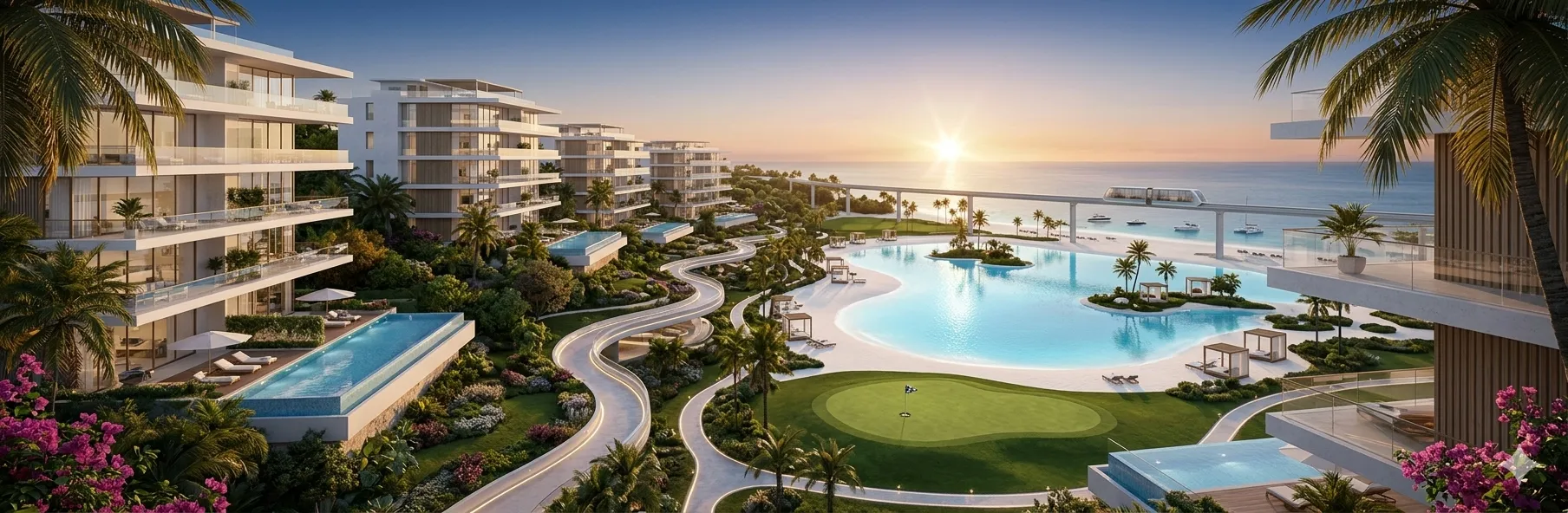
Micro-Markets: Where Global Capital is Moving in 2026
Data-driven analysis indicates a steady double-digit annualized price appreciation across prime sectors. This annual baseline increase of 15% is not the product of a speculative bubble, but rather a critical, structural shortage of premium land suitable for development directly on the coastline, paired with an aggressive rise in local construction standards. Strategic capital allocation requires looking closer at specific high-performing zones within our Punta Cana Real Estate Market Report.
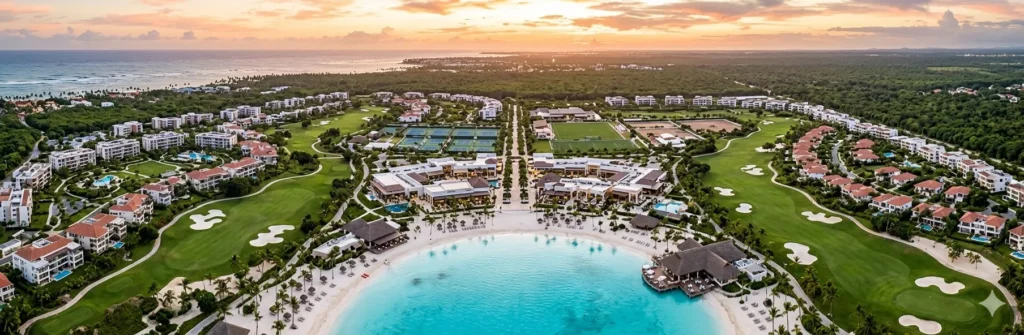
Cap Cana: The Safe Haven of Value
According to the latest Punta Cana Real Estate Market Report datasets, luxury apartments featuring private docks or direct marina views within Cap Cana have witnessed an exceptional year-over-year capital appreciation of 18%, effortlessly surpassing any other luxury residential area on the island. The institutional or private investor entering this micro-market is not merely searching for immediate rental cash flow, but is fundamentally prioritizing long-term capital preservation and aggressive, structured capital gains over the next decade.
Downtown Punta Cana: The Performance Hub
The primary operational difference in 2026 is the rapid delivery of massive municipal and private infrastructure. The successful opening of state-of-the-art convention centers, commercial plazas, and international theme parks has successfully de-seasonationalized rental demand. Investors are no longer dependent solely on traditional school breaks or winter holidays. Instead, corporate business tourism, international events, and exhibitions reliably maintain net average occupancy rates above 72% year-round across the urban center.
Security, Legal Protections, and Tax Shielding
A vital section of this Punta Cana Real Estate Market Report focuses on the unprecedented legal and tax mechanisms that shield foreign investments in the Dominican Republic. The highly celebrated 3% total savings on property transfer taxes, combined with the 1% annual IPI (Real Estate Property Tax) exemption, are exactly what allow an investment in this jurisdiction to remain immensely competitive against traditional markets like the Riviera Maya or Miami, where the localized tax burdens are significantly higher and restrict net yields.
Projections for the Close of 2026
Moving dynamically toward the second half of 2026, our modeling foresees a healthy consolidation of real estate asset prices. We do not expect market corrections or drops, but rather a firm stabilization at high, sustainable price levels. The historical window of opportunity to buy “cheap, generic” properties has officially closed; however, the strategic window to buy “well” has opened. The market is now rewarding high-quality assets backed by professional management, top-tier energy efficiency certifications, and core strategic locations that retain intrinsic value despite global inflationary fluctuations.
What the Investor Really Needs to Know: 7 Strategic Pillars
- Strict Due Diligence: Always demand and verify the official resolution from the Tourism Development Council (CONFOTUR) to completely guarantee your 15-year tax exemptions before executing an acquisition contract.
- Off-Plan vs. Immediate Delivery: Early-stage pre-sales remain structurally more profitable for capturing early capital gains, yielding documented profits between 15% and 20% before physical key delivery.
- Inflation Adjustments: Sustained global inflation has permanently pushed up the baseline cost of raw construction materials, directly increasing the underlying replacement value of existing, built inventory.
- The Rental Market Evolution: In 2026, the local market faces an oversupply of “generic, unmanaged” units. The most profitable asset execution now relies exclusively on the “Hotel Pool” model or contracting specialized, top-tier property management companies.
- Common Investor Errors: Avoid purchasing real estate assets based entirely on an attractive entry price per square meter without actively verifying the “Project Management” track record or long-term maintenance history.
- High-Growth Zones for 2027: The Bávaro-Verón logistical corridor currently offers the most competitive prices per square meter ($1,800 – $2,100 USD), with major public infrastructure finishing within the next 18 months.
- Structured Financing Trends: Developer-backed interest-free financing structures during the active construction phase represent the most attractive trend in 2026, especially as local mortgage bank rates remain high, ranging from 7% to 9%.
FAQ Section
To conclude this comprehensive Punta Cana Real Estate Market Report, we address the exact long-tail queries driving international investor search intent in 2026.
1. Is investing in pre-construction condos under CONFOTUR law in Punta Cana still safe in 2026?
Yes, it is remarkably safe provided that your legal counsel verifies the project’s specific, updated CONFOTUR resolution certificate. This structural law shields your asset from the 3% transfer tax and 1% annual property tax (IPI) for up to 15 years, significantly lowering operational costs and maximizing your net ROI compared to non-exempt properties.
2. What are the best micro-markets for high rental yields in Punta Cana real estate?
According to data within our Punta Cana Real Estate Market Report, the best micro-markets split into two distinct profiles: Cap Cana for ultra-luxury capital preservation and premium marina rentals, and Downtown Punta Cana / Cortecito for high-occupancy corporate, commercial, and short-term vacation rentals driving cash flow.
3. How does capital appreciation in Cap Cana luxury properties compare to Riviera Maya real estate?
Cap Cana luxury properties have demonstrated a resilient 18% year-over-year capital appreciation in 2026. This performance drastically outpaces Riviera Maya real estate due to strict master-planned zoning limits, a severe scarcity of oceanfront plots, and a lower tax environment that keeps international luxury capital flowing into the Dominican Republic.
4. What is the average return on investment for vacation rentals in Downtown Punta Cana?
Net return on investment (ROI) for prime vacation rentals in Downtown Punta Cana ranges between 8% and 12.5% annually in 2026. These metrics are heavily supported by a 72% average annual occupancy rate driven by the new convention centers, de-seasonalized business travel, and professional on-site operator management.
5. Should I choose developer financing or local bank loans for purchasing Dominican Republic property?
In the current macroeconomic environment, interest-free developer financing during the construction phase is highly recommended. Local Dominican bank loans carry relatively high interest rates ranging from 7% to 9%, making interest-free developer installments the most cost-effective option to preserve liquidity.
6. What are the hidden costs when buying property in the Bávaro-Verón growth corridor?
The hidden costs generally include closing legal fees (typically 1% to 1.5% of the purchase price), notary fees, property insurance, and initial setup utility connections. If the property lacks CONFOTUR status, you must also budget for the standard 3% property transfer tax.
7. Why is professional property management critical for real estate investment in Punta Cana?
As highlighted in this Punta Cana Real Estate Market Report, the 2026 market is saturated with unmanaged, generic properties. Utilizing a professional property management company or a branded “Hotel Pool” ensures your property maintains 5-star hospitality standards, dynamic pricing optimizations, and exposure on premium global distribution networks.

Digital Nomad Guide
Living and Remote Working in Punta Cana: A Digital Nomad Guide The profile of the…
Where to Invest in the Caribbean?
Punta Cana vs. Tulum vs. Cancún: Where to Invest in the Caribbean? When an international…

Real Estate Attorneys
Real Estate Attorneys in Punta Cana: The Ultimate Buyer’s Guide for Foreign Investors Buying a…

Punta Cana Real Estate Market Report
Punta Cana Real Estate Market Report 2026: Tourism Statistics & Investment Analytics Making strategic wealth…
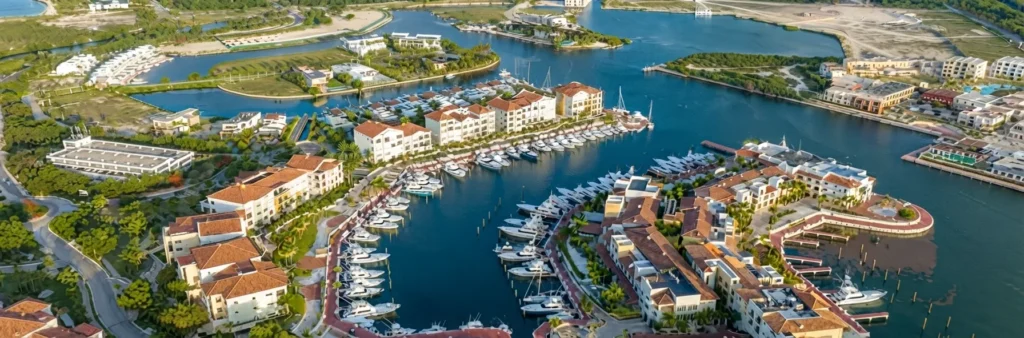
Marina Cap Cana Yachting
Marina Cap Cana: The Ultimate Caribbean Luxury Marina, Yachting Hub, and Real Estate Investment Destination…
Living in Cap Cana
What Is It Like Living in Cap Cana? Essential Services & Exclusivity for Residents Punta…