

How Much Does It Cost to Live in Punta Cana Per Month? Real Expat Expenses in 2026
Are you considering relocating to the Caribbean, spending extended periods working remotely as a digital nomad, or retiring under the Dominican Republic sun? Punta Cana has established itself as the premier destination for expats worldwide—not only for its world-class white-sand beaches and safety but also for its exceptional modern infrastructure.
However, before taking the plunge or making a real estate investment, it is essential to clear up a vital question: how much does it really cost to live in Punta Cana per month? Below, we break down the real cost of living in Punta Cana for foreigners in 2026, analyzing actual expenses for housing, utilities, groceries, transportation, and entertainment—without the tourism filters.
Housing: The Foundation of Your Budget to Live in Punta Cana
Your largest living expense will vary significantly based on the neighborhood (Bávaro, Los Corales, Punta Cana Village, or Cap Cana) and the specific amenities of the gated community.
- 1-Bedroom Apartment (Tourist zones or premium residential areas): $600 to $1,000 USD per month.
- 2 or 3-Bedroom Apartment (Family-oriented communities or complexes with pools): $1,000 to $1,800 USD per month.
- Villas and Ultra-Exclusive Enclaves (Cap Cana or Punta Cana Resort): Starting at $2,500 USD and up.
💡 Investment Tip: Many expats quickly realize that paying monthly rent is not the most cost-effective option in the long run. By purchasing your own apartment in Punta Cana, you eliminate your primary fixed monthly expense. Furthermore, you can take advantage of the major tax incentives under the Confotur Law (exemption from the 1% annual property tax) while generating high-yield rental income when you are not using the property.
Basic Utilities: Electricity, High-Speed Internet, and Water
Utilities in the Dominican Republic have distinct characteristics that you should understand to prevent unexpected surprises on your monthly bills.
- Electricity (The most critical variable expense): Live in Punta Cana features a highly reliable, efficient, and stable private power grid (managed by CEPM). The cost depends directly on how much you run your air conditioning. For a typical 2-bedroom apartment, the average monthly bill ranges from $120 to $250 USD, assuming the A/C runs during sleeping hours and on the hottest tropical summer days.
- High-Speed Fiber Optic Internet & Mobile Data: A reliable residential fiber-optic internet plan (via Claro or Altice) delivering 100 Mbps, paired with an unlimited mobile data plan, runs about $50 to $60 USD per month. This is excellent for digital nomads and remote professionals.
- Water and Gas: These services are highly economical. Combined, they rarely exceed $20 to $30 USD per month.
Live in Punta Cana : Food and Grocery Budgets
Your food expenses will depend closely on your lifestyle. Punta Cana features major modern supermarket chains built to international standards (such as Supermercados Nacional and Jumbo). Here, you will find an abundance of fresh local produce alongside familiar imported US and European brands.
- Monthly Grocery Bill (Per Person): A balanced budget focused on fresh local items (tropical fruits, fresh seafood, vegetables) runs between $250 and $350 USD. If your cart consists heavily of imported products from back home, expect the budget to scale up to $450 USD.
- Dining Out (Restaurants): A casual lunch menu or a meal at a local spot costs around $10 USD. A dinner for two at a mid-to-high-range restaurant in vibrant areas like Bávaro or El Cortecito typically ranges from $50 to $80 USD.
Transportation and Mobility
Getting around the area is straightforward, but for long-term stays, having your own vehicle offers the ultimate convenience.
- Fuel / Vehicle Ownership: If you choose to buy a car or rent long-term, the estimated fuel cost for standard commuting around the resort and beach towns is roughly $100 to $150 USD per month.
- Ridesharing (Uber) and Taxis: Short trips within the Bávaro or Punta Cana areas typically range from $5 to $15 USD per ride.
Private Health Insurance
For an expat living in the country, securing private medical insurance is non-negotiable. Private healthcare in Punta Cana—anchored by top-tier facilities like Centro Médico Punta Cana and the brand-new IMED Hospital—is world-class, but out-of-pocket costs can accumulate quickly without a policy.
A high-quality health insurance plan providing both excellent local and international coverage costs approximately $70 to $150 USD per month per person, depending on your age and selected coverage options.
Cost to Live in Punta Cana : Total Monthly Cost Summary by Lifestyle (2026)

To help calculate your estimated final budget for a single individual (excluding private schooling fees), the real market data for 2026 breaks down into two distinct expat profiles:
Profile A: Moderate & Cost-Efficient Lifestyle
Designed for those looking to enjoy the destination while optimizing expenses, living in a solid Bávaro community, and prioritizing fresh local goods.
- Housing & HOA Fees: $700 USD
- Utilities & High-Speed Internet: $170 USD
- Groceries & Household Goods: $280 USD
- Dining Out & Entertainment: $150 USD
- Transportation & Gas: $80 USD
- Private Health Insurance: $80 USD
- Estimated Monthly Budget: $1,460 USD
Profile B: Premium / Corporate Expat Lifestyle
Designed for individuals seeking maximum luxury, residing in high-end gated communities (such as Punta Cana Village or exclusive beachfront sectors of El Cortecito), utilizing continuous central A/C, and enjoying premium dining and nightlife.
- Housing & Luxury Community Fees: $1,500 USD
- Utilities & High-Speed Internet: $290 USD
- Groceries & Imported Brands: $400 USD
- Fine Dining & Nightlife: $350 USD
- Vehicle Rental / Fuel / Transport: $150 USD
- Premium International Health Insurance: $150 USD
- Estimated Monthly Budget: $2,840 USD
Conclusion: Is Moving to Punta Cana Worth It?
The cost of living in Punta Cana for expats is extraordinarily competitive compared to major metropolitan areas in the United States or Canada. This is especially true when you factor in the incredible quality of life, the pristine year-round climate, the high safety standards, and the straightforward legal residency pathways.
Many real estate investors choose to secure properties pre-construction or move-in ready. By owning their home outright, they eliminate rent from their fixed monthly costs—turning their Caribbean lifestyle into an experience that is not only deeply fulfilling but also financially smart.
If you want to discover the highest-yielding residential neighborhoods or are searching for your next home in the Caribbean, connect with our team at Punta Cana Top House. We are here to guide you through every step of the process.
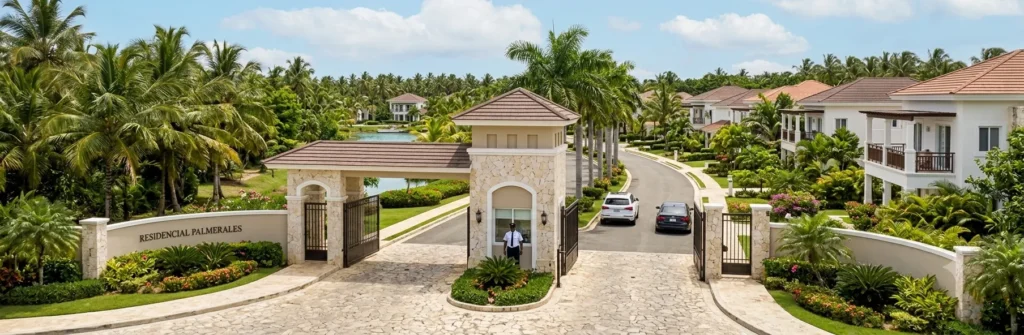
Punta Cana HOA Fees
Punta Cana HOA Fees: What They Include & How They are Calculated When analyzing the…

Trust Account
What is a Trust Account in the Dominican Republic and How Does It Protect Your…
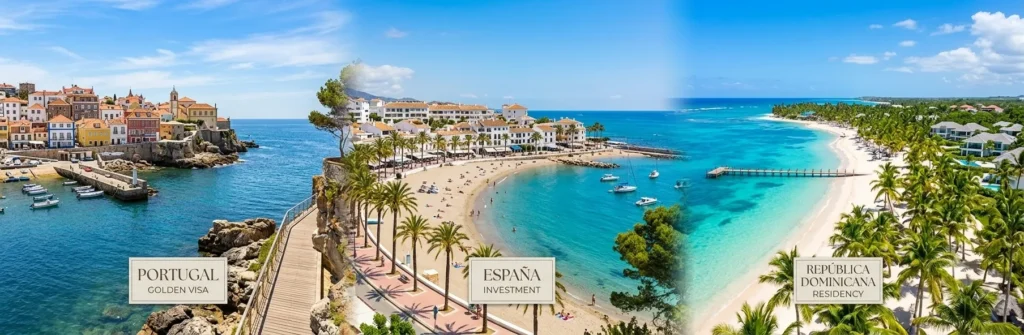
Real Estate Investment Residency
Real Estate Investment Residency 2026: Dominican Republic vs. Spain vs. Portugal Over the last decade,…
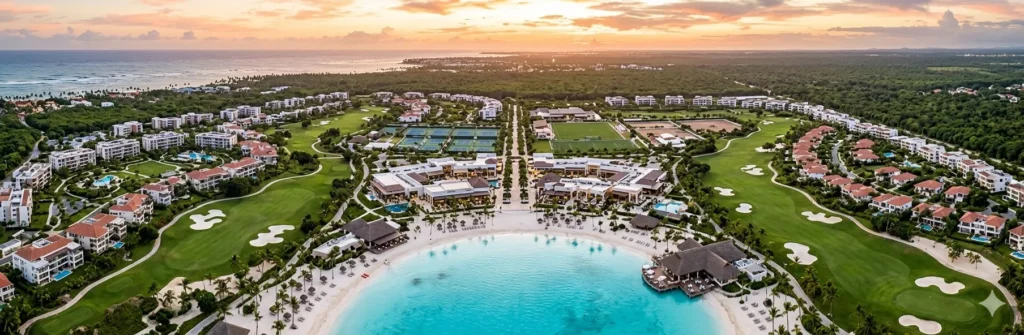
Living in Cap Cana
What Is It Like Living in Cap Cana? Essential Services & Exclusivity for Residents Punta…

Los Establos Cap Cana
Los Establos Equestrian City: The Epicenter of Elegance and Lifestyle in Cap Cana Los Establos…

Punta Cana Real Estate Market Report
Punta Cana Real Estate Market Report 2026: Tourism Statistics & Investment Analytics Making strategic wealth…